
I'll Protect You
Learning to be a more compassionate athlete

I’ve been guilty many times of saying, “I’m a better runner than I was (insert random amount of time).” It could be 3 months, 6 months, 3 years, but I’ve found myself putting past Alyssa down as though she were not good enough. As if there was something wrong with Alyssa from 2015, 2020, 2023 or even as close as April, 2025. But, there has never been anything wrong with her. Of course, in the sport of ultra running and in the game of life, wisdom comes from experience. There are many mistakes I have made in running that I don’t make as much or at all, but that’s not a platform for superiority. It’s just a nod to learning. But so often, I have lived in the narrative of saying, “well I’m not her anymore.”
Inherently, that mindset triggers the fear that I will slide backwards. I’m on this linear trajectory and any lesser result, a worse running split, a slip in my mental game, means I am not enough. That growth can only be in the face of creating a better me and casting away former versions of myself. But something is changing.
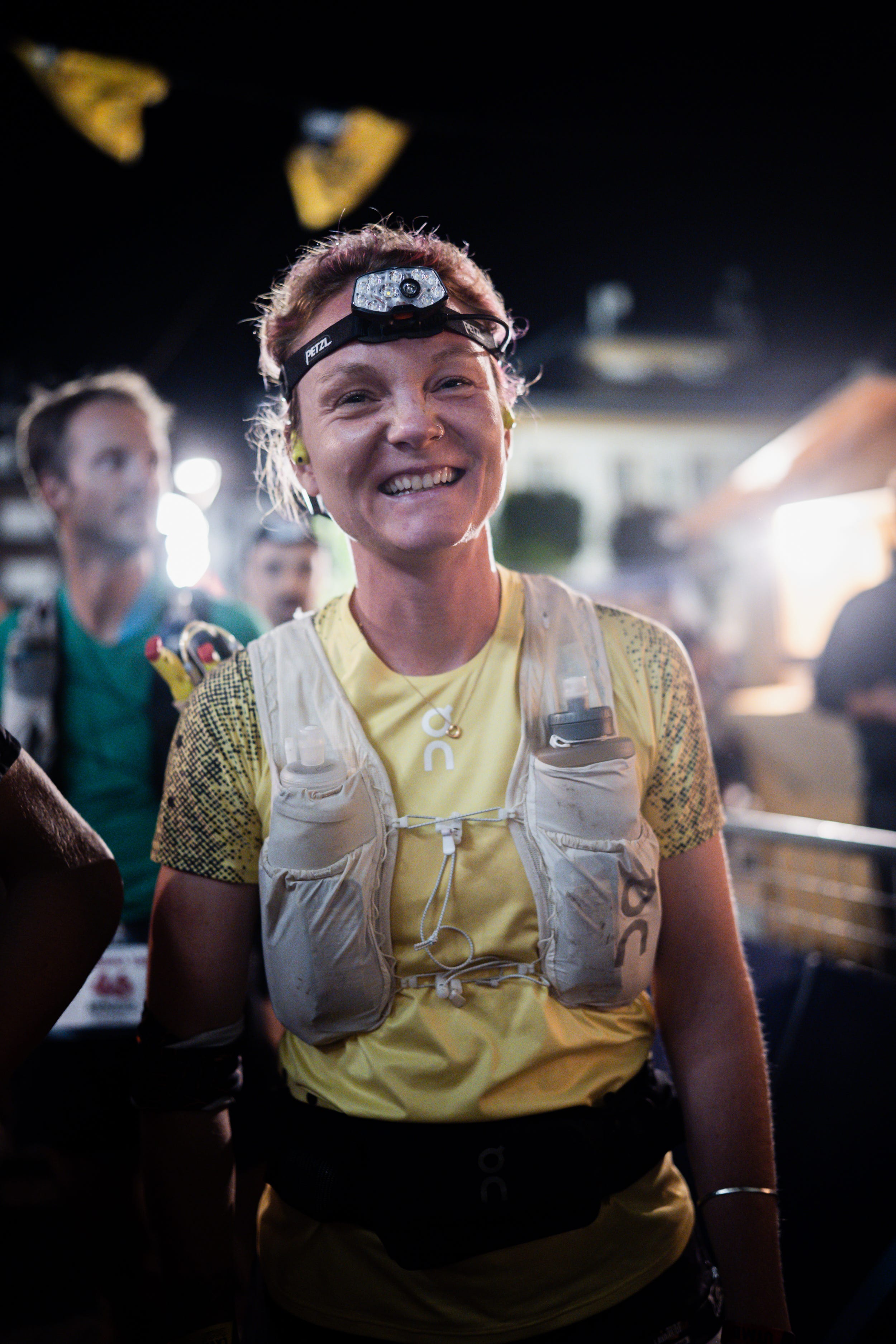
During Lavaredo, right at the start line I ran into someone I went to high school with at Stratton Mountain School. Stratton, as I’ve mentioned before, was a pretty difficult time for me due to my health complications with Ulcerative Colitis. It shook my core identity and created a version of myself in athletics that has constantly told me I am not good enough. Meeting one of my classmates was wonderful, but it instantly brought feelings of vulnerability. 14-year-old Alyssa sprang into my head and reminded me of how helpless I felt when I was sick. I tried to shove her away at the start line as the music blared and the thousands of people in the town square created an absolute cacophony of energy and sound.
At around mile 26 of the race, as I popped out onto a road section, four words came into my head. “I will protect you.” Tim, my mental training coach, and I have spoken at length about the times at which we form our identity and how they are a part of our narratives, but they do not have to be the primary controllers. But truthfully, I have never been able to hold the 14-year-old Alyssa with the care and attention she deserved without letting her become the primary voice. Yet here I was, in the wee hours of the morning in the heart of the Dolomites, listening to a voice ready to protect, not cast away, dominate, or be afraid. Just, it's okay, I hear you, I’ll protect you.
After that moment in Lavaredo, I’ve caught myself trying to continue the narrative of being a better version of myself. Gosh, Alyssa from Desert Rats didn’t know what she was doing; she was just too naive, not fast enough, lesser than etc. But, I’ve been stopping myself. Instead, I’ve found a different way to describe these changes. I’ve started saying that I’m a more compassionate athlete, a kinder athlete to myself and all the versions of me that exist in my brain. This allows me to expand, to envelope, and not be afraid that I can’t handle the parts of me that scare me. When they come, I will welcome them and say, “I will protect you.”